
Essential Safety Checks Before Driving in Snow or Rain
Driving in adverse weather conditions such as snow or rain can dramatically increase the risk of a dangerous situation for both drivers and pedestrians. It is crucial to perform specific safety checks to ensure your vehicle is prepared for the challenges of wet or icy roads. This article will guide you through essential pre-trip inspections and safety measures to take before setting out in unfavorable weather conditions.
1. Check Your Tires
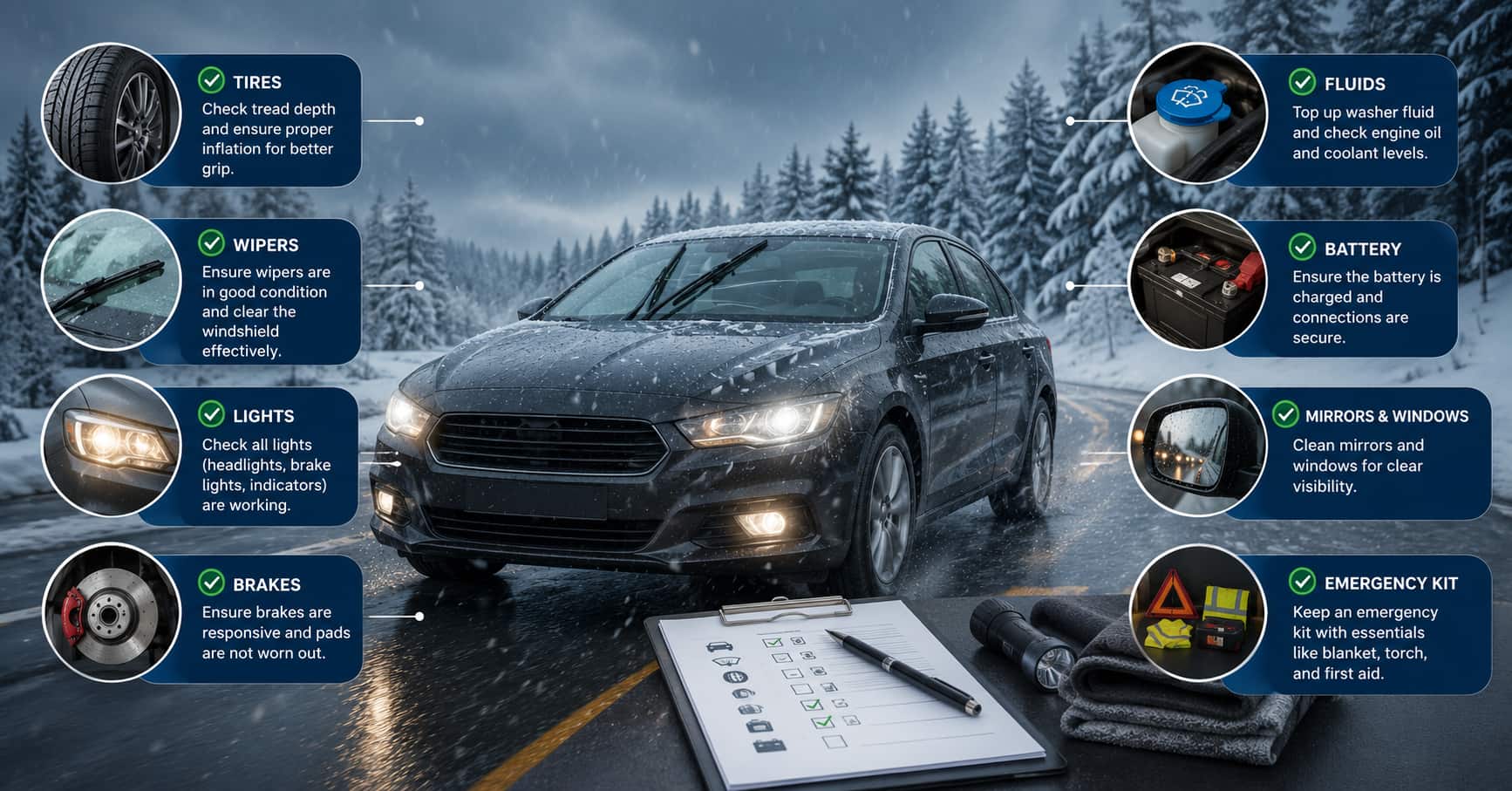
One of the most critical checks involves your vehicle's tires. For snow conditions, tires should have adequate tread depth to navigate snowy roads effectively. A minimum tread depth of 3mm is recommended for winter driving. For rainy conditions, ensure your tires are capable of handling wet roads and reducing the risk of hydroplaning. Consider investing in all-weather tires that provide better grip and stability in various conditions.
2. Inspect Your Brakes
Brakes are your first line of defense against accidents. Before driving in rain or snow, ensure your brakes are in excellent condition. Check for any signs of wear and listen for unusual noises that might indicate brake problems. In wet and icy conditions, stopping distances can double, making effective brakes critical.
3. Test Your Lights
Proper visibility is key in poor weather conditions. Test all your lights – headlights, brake lights, tail lights, and indicators – to ensure they are functioning correctly. Bright and clear lights can help other drivers see your vehicle during snowfall or heavy rain.
4. Verify Windshield Wipers and Fluids
Windshield wipers are crucial for maintaining visibility during snow or rain. Replace any worn or damaged wiper blades and check that your wiper fluid reservoir is full with a winter-rated washer fluid. This fluid is designed to prevent freezing and improve windshield cleaning, which is essential in icy conditions.
5. Assess Battery Performance
Cold temperatures can reduce your car's battery performance, which can lead to difficulties in starting your engine. Check your battery’s charge and ensure that it is functioning well. Consider a professional check-up if your battery is more than three years old, as older batteries are more likely to fail in cold conditions.
6. Prepare an Emergency Kit
Always carry an emergency kit when driving in snow or rain. This kit should include items such as a flashlight, blankets, a first-aid kit, extra clothes, and non-perishable snacks. It's also wise to have a shovel and sand or cat litter to help with traction if you get stuck in the snow.
7. Plan Your Route
Before you leave, plan your route and check traffic and weather updates. Use apps or websites that provide real-time information to avoid areas with heavy snowfall or flooding. Allow extra time for your journey, as adverse weather conditions can slow down traffic significantly.
Conclusion
Performing these essential safety checks before driving in snow or rain can dramatically increase your safety and help prevent road accidents. Always prioritize your safety and the safety of others on the road. Remember, the best way to stay safe is to be prepared. For more detailed driving tips and vehicle maintenance advice, visit autoinsight.ca .



Comments (0)