
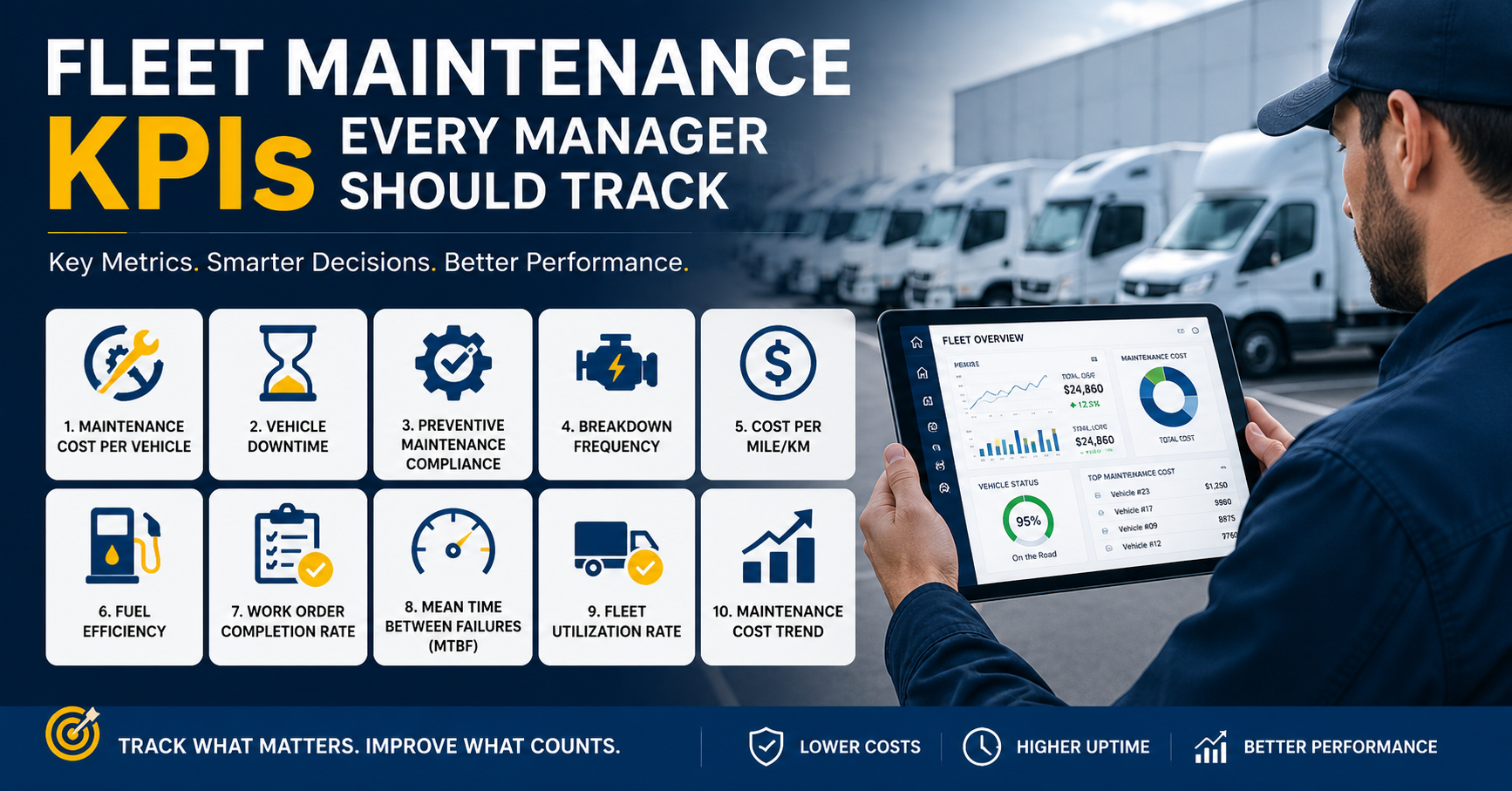
Fleet Maintenance KPIs Every Manager Should Track
Effective fleet management is crucial for businesses relying on transportation and logistics. Monitoring the right Key Performance Indicators (KPIs) can significantly enhance fleet operations, reduce costs, and improve overall efficiency. This guide explores essential fleet maintenance KPIs that every manager should consider to optimize their fleet operations.
1. Vehicle Maintenance Cost
One of the most critical KPIs to track in fleet management is the total cost of maintaining each vehicle. This includes both preventive and corrective maintenance expenses. By analyzing these costs, managers can identify trends, plan budget allocations, and make cost-effective decisions regarding vehicle repairs or replacements.
2. Downtime Duration
Downtime is a significant productivity killer in fleet operations. It is vital to measure the average downtime per vehicle to assess the efficiency of the maintenance team. Reducing downtime not only boosts productivity but also enhances customer satisfaction by ensuring timely deliveries and services.
3. Repair Time Compliance
This KPI measures whether maintenance and repairs are completed within the set deadlines. Tracking repair time compliance helps ensure that vehicles are back on the road as planned, minimizing disruptions in operations and maintaining service reliability.
4. Preventive Maintenance Compliance
Preventive maintenance is essential for reducing the likelihood of vehicle breakdowns. This KPI tracks how well the fleet adheres to the preventive maintenance schedule. High compliance indicates good management practices, potentially leading to longer vehicle life spans and reduced repair costs.
For more detailed insights and strategies on fleet management, visit our website at autoinsight.ca .
5. Fuel Efficiency
Fuel consumption has a direct impact on the profitability of fleet operations. Tracking fuel efficiency as a KPI helps managers identify which vehicles are not performing optimally and require maintenance checks or replacements to ensure cost efficiency.
6. Tire Wear and Replacement Timing
Tires are critical components that can significantly affect a vehicle's performance and safety. Monitoring tire wear and timely replacement can prevent accidents, enhance vehicle efficiency, and reduce unnecessary costs from early replacements.
7. Safety and Compliance
Ensuring that all vehicles meet safety and regulatory standards is crucial. This KPI tracks the number of compliance issues and safety incidents, helping fleets to mitigate risks and avoid legal penalties.
8. Customer Satisfaction
While not directly related to maintenance, customer satisfaction is a critical indicator of fleet efficiency. Delays, breakdowns, or safety issues can all negatively impact customer perceptions. Tracking this KPI helps managers understand the direct impact of fleet maintenance on customer relations.
Conclusion
Effective fleet maintenance management is not just about keeping vehicles operational; it's also about optimizing performance and ensuring cost-efficiency. By tracking these essential KPIs, fleet managers can gain valuable insights into their operations, make informed decisions, and maintain a competitive edge in the logistics and transportation industry. Implementing a robust tracking system for these KPIs will ensure that you stay ahead of operational challenges and meet your business objectives efficiently.




Comments (0)