
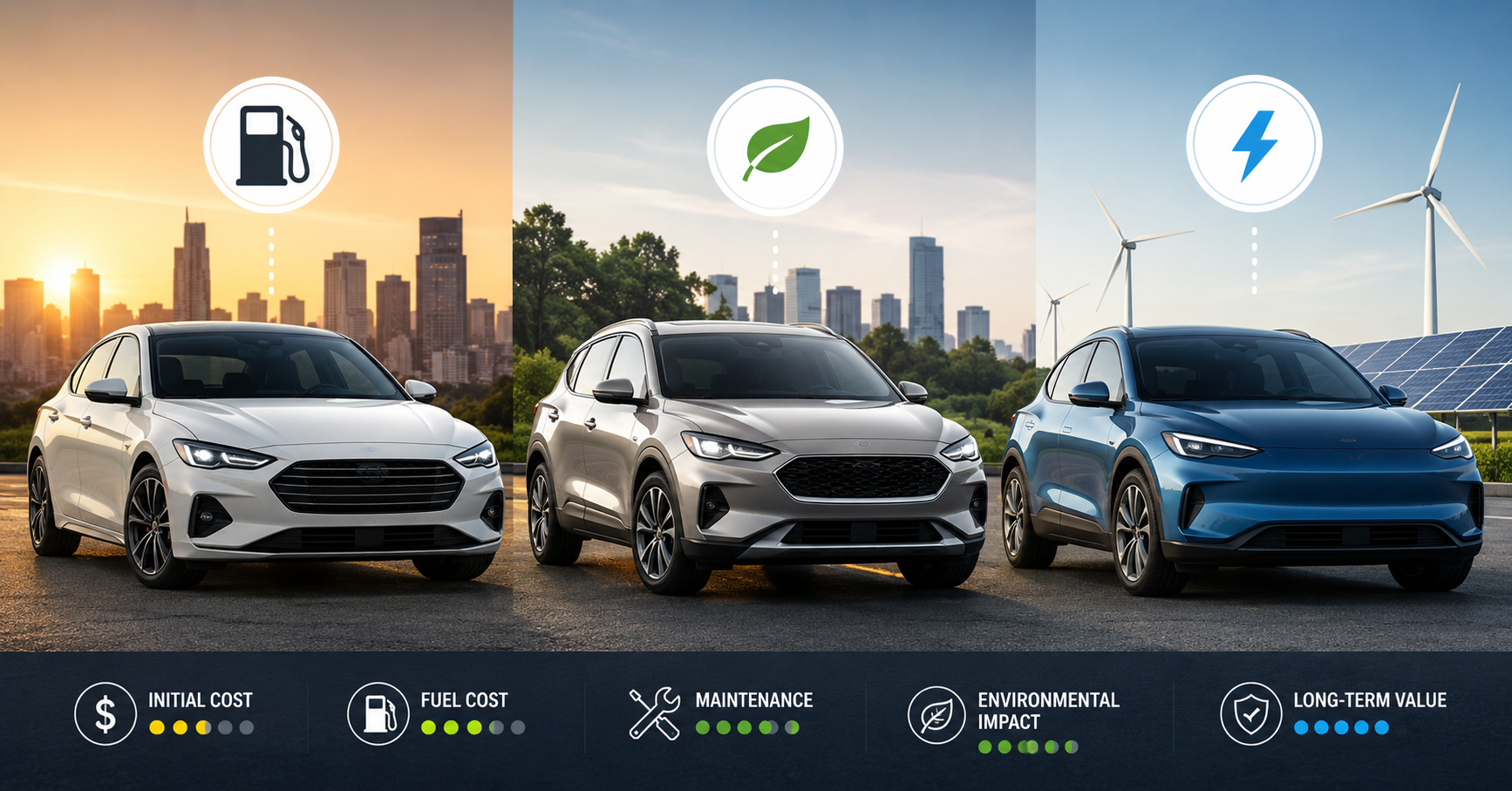
Gas vs Hybrid vs Electric Cars: Which Should You Buy in 2026?
As we approach 2026, the automotive landscape continues to evolve, offering consumers a variety of choices when it comes to the type of vehicle they can buy. With concerns about the environment and fuel prices, the debate between gas, hybrid, and electric cars is more relevant than ever. In this article, we will explore the benefits and drawbacks of each type to help you decide which is the best choice for your needs in 2026.
Understanding the Differences
Before making a decision, it's essential to understand what distinguishes gas, hybrid, and electric cars from each other:
- Gas Cars: Traditional vehicles powered by gasoline engines. They are known for their reliability and extensive range.
- Hybrid Cars: These vehicles combine a gasoline engine with one or more electric motors. They use gas but are more fuel-efficient and emit less CO2 than purely gas-powered cars.
- Electric Cars (EVs): Powered entirely by electricity, EVs are charged via an external power source and produce zero tailpipe emissions.
Gas Cars: Pros and Cons
Gas cars are familiar and have a well-established infrastructure supporting them. However, they are also the least environmentally friendly option.
- Pros: Wider range of models, generally lower upfront costs, and extensive refueling infrastructure.
- Cons: Higher emissions, dependence on fluctuating fuel prices, less efficient than electric and hybrid models.
Hybrid Cars: Pros and Cons
Hybrid cars offer a middle ground between gas and electric vehicles. They are more efficient than gas cars but don't require as much infrastructure as electric cars.
- Pros: Better fuel efficiency than gas cars, reduced emissions, and no range anxiety compared to EVs.
- Cons: Higher upfront costs than gas cars, and the battery can be expensive to replace.
Electric Cars: Pros and Cons
Electric vehicles are gaining popularity due to their environmental benefits and lower operating costs.
- Pros: Zero emissions, low operating costs, high efficiency, and often come with tax incentives.
- Cons: Higher initial purchase price, reliance on charging infrastructure, and longer refueling times than gas cars.
For more detailed insights, visit our website at autoinsight.ca .
Considerations for 2026
When choosing between gas, hybrid, and electric cars in 2026, consider the following factors:
- Environmental Impact: If reducing your carbon footprint is a priority, electric cars are the best option.
- Total Cost of Ownership: Consider not just the purchase price, but also long-term costs such as fuel, maintenance, and potential tax incentives.
- Lifestyle and Usage: Think about how you use your car. If you frequently drive long distances, a hybrid might be more practical than an electric car, unless EV charging infrastructure dramatically improves.
- Future Resale Value: Electric and hybrid cars may hold their value better as more regions impose restrictions on gasoline vehicles.
Conclusion
Choosing between a gas, hybrid, or electric car in 2026 will largely depend on your personal needs, environmental concerns, and economic considerations. Electric cars offer significant benefits in terms of emissions and cost of operation but require a reliable charging infrastructure. Hybrids can be a great transitional option, providing better efficiency than gas cars without the need for full reliance on a charging network. Gas cars, while currently less environmentally friendly, continue to offer convenience and affordability. As the automotive landscape evolves, staying informed will help you make the best decision for your circumstances in 2026.



Comments (0)