
Most Common Engine Fault Codes Explained in Simple Terms
When your vehicle's check engine light comes on, it can be a source of stress and confusion. The light could indicate anything from a minor issue to a potentially major problem. Fortunately, modern cars are equipped with an onboard diagnostics system (OBD-II) that logs fault codes to help diagnose the issue. Here at AutoInsight, we'll break down some of the most common engine fault codes to help you understand what might be going wrong with your vehicle.
P0171 and P0174 - System Too Lean
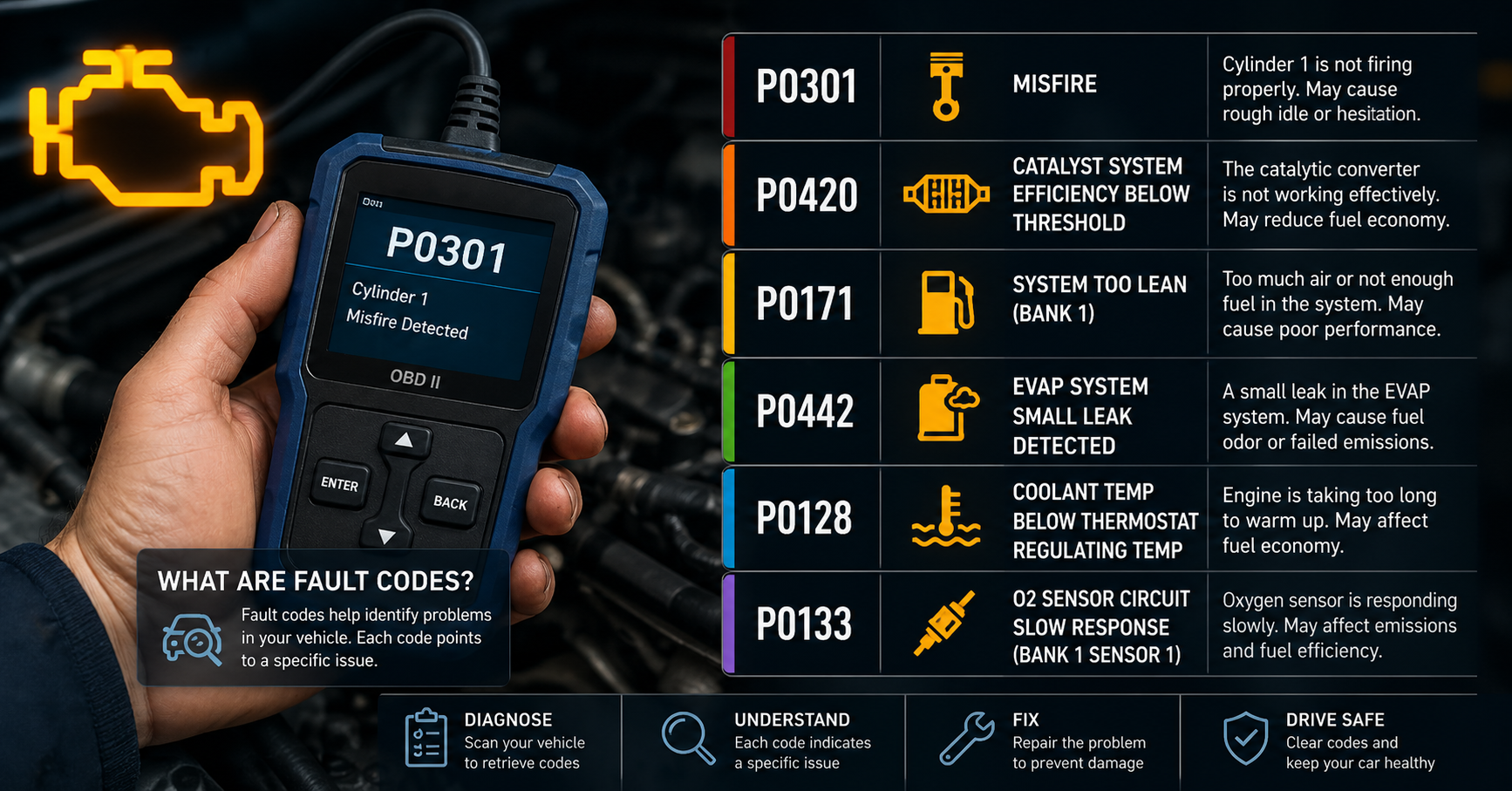
Codes P0171 and P0174 indicate that there is too much air and not enough fuel in your engine's air/fuel mixture. This situation can lead to inefficient engine performance and increased emissions. Common causes include vacuum leaks, faulty mass airflow sensors, and weak fuel pumps. Addressing these issues early can prevent more serious problems down the line.
P030 - Random/Multiple Cylinder Misfire Detected
The P030 code is one of the most concerning, as it indicates misfires in random or multiple engine cylinders. This can result in poor performance, reduced fuel economy, and increased emissions. Potential causes are numerous and range from worn spark plugs and ignition coils to improper fuel pressure. Detailed diagnostics are essential to pinpoint the root cause and resolve it effectively.
P042 - Catalyst System Efficiency Below Threshold
When you see a P042 code, it points to a problem with the catalytic converter's efficiency. This part of your car's exhaust system reduces environmental pollution by converting harmful gases into harmless molecules. A malfunctioning catalytic converter can lead to a failed emissions test and may require replacement. Causes can include exhaust leaks, engine misfires, or the use of inappropriate fuel types.
P0128 - Coolant Thermostat (Coolant Temperature Below Thermostat Regulating Temperature)
The P0128 code suggests that your engine's coolant is not reaching the required temperature for optimal operation. This could be due to a faulty thermostat or a low coolant level. Maintaining the correct coolant temperature is vital for engine efficiency and longevity, making timely resolution of this issue crucial.
P0442 - Evaporative Emission System Leak Detected (Small Leak)
This code refers to a small leak in your vehicle's evaporative emission system, which controls the release of vapors from the fuel. Common culprits include loose or damaged gas caps, faulty vent valves, or deteriorated fuel hoses. While a small leak might not affect your car's performance significantly, it can lead to failed state emissions tests and should be addressed promptly.
Conclusion
Understanding these common engine fault codes can help you better diagnose vehicle issues and decide the next steps for repair. Whether you're a seasoned mechanic or a concerned car owner, knowledge about what these codes mean provides valuable insight into your vehicle's health. Remember, addressing fault codes promptly with the help of AutoInsight not only ensures your safety but also extends the lifespan of your car. Keep this guide handy, and don't hesitate to seek professional help when dealing with complex engine problems.



Comments (0)