
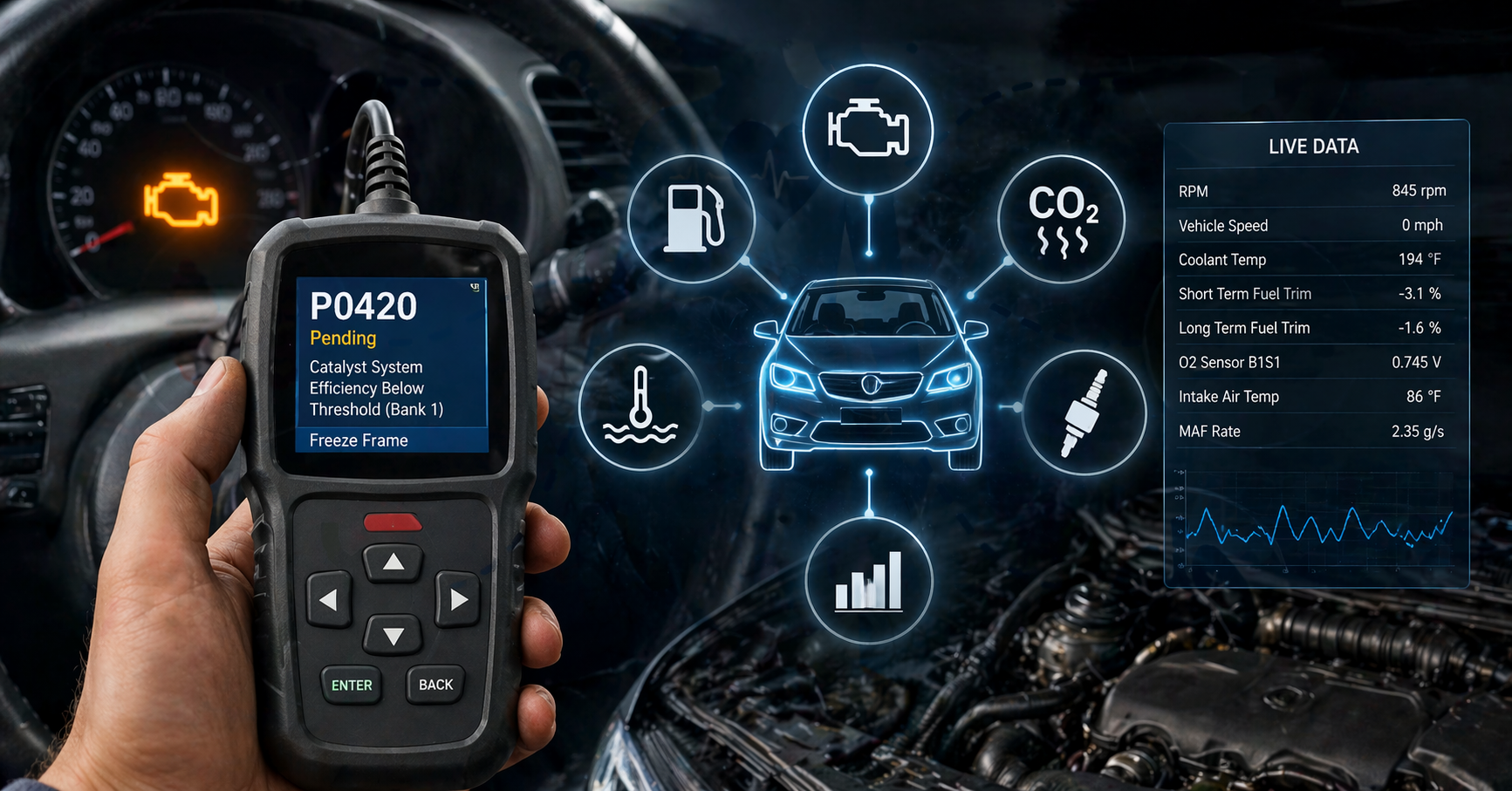
OBD2 Scanners Explained: What Your Car Is Really Telling You
When the check engine light illuminates on your dashboard, it's not just a prelude to a potential expense; it's a cue to quickly understand your car’s health. OBD2 (On-Board Diagnostics II) scanners are pivotal in decoding the myriad of complexities under your car's hood. In this comprehensive guide, we'll explore how OBD2 scanners work, why every car owner should consider having one, and how these devices can help keep your vehicle in top-notch condition.
Understanding OBD2 Scanners
OBD2 scanners are handheld devices that can be plugged into the OBD2 port of any vehicle made after 1996 in the United States. Once connected, they fetch diagnostic trouble codes (DTCs) stored in the car’s onboard computer. These codes are crucial for identifying issues ranging from a malfunctioning emission system to why the check engine light is on.
How Do OBD2 Scanners Work?
The magic of OBD2 scanners lies in their simplicity and efficacy. By plugging the device into the OBD2 port, typically located under the dashboard near the steering wheel, the scanner reads data transmitted by the car's computer. This data includes everything from engine temperature and RPMs to detailed reports on the engine and transmission health. The scanner then translates these complex codes into understandable terms to help pinpoint exact issues.
The Benefits of Using an OBD2 Scanner
Using an OBD2 scanner comes with numerous benefits:
- Cost Efficiency: Early diagnosis of potential problems can save on hefty repair bills down the line.
- Convenience: Diagnose car problems at your convenience, without the need for immediate professional assistance.
- Time-Saving: Reduce the time your car spends at the mechanic by knowing exactly what needs fixing.
- Empowerment: Gain better understanding and control over the maintenance of your vehicle.
Popular Types of OBD2 Scanners
There are generally two types of OBD2 scanners available on the market:
- Code Readers: These are simple, inexpensive devices that can read and clear codes from any vehicle. However, they provide limited information on the source of the problem.
- Scan Tools: Offering more advanced features, scan tools provide comprehensive diagnostic reports, real-time data, and sometimes, connectivity with smartphones and tablets.
For those who are tech-savvy, wireless OBD2 scanners that connect to a smartphone app like [autoinsight]'s latest model, offer innovative features such as personalized tips for vehicle maintenance and performance optimization.
Choosing the Right OBD2 Scanner for You
When selecting an OBD2 scanner, consider the following:
- Compatibility: Ensure the scanner supports your vehicle’s make and model.
- Functionality: Decide if you need a simple code reader or a more advanced scan tool based on your technical skills and requirements.
- Usability: Look for a user-friendly interface and, preferably, one that offers support or tutorials.
- Price: Determine your budget. More features typically mean a higher price, but for regular use, a more robust tool might be worth the investment.
Implementing OBD2 Scanners for Routine Checks
Integrating the use of an OBD2 scanner into your regular vehicle maintenance routine can lead to a longer vehicle lifespan and optimized performance. With regular checks, you can monitor your vehicle's health and address issues before they escalate into major repairs.
Conclusion
OBD2 scanners are more than just tools for troubleshooting; they are a wise investment in your vehicle's longevity and safety. Whether you're a car enthusiast or simply looking to keep your vehicle running smoothly, understanding and utilizing an OBD2 scanner can significantly enhance your automotive experience. Consider a model from autoinsight to ensure reliability and advanced features tailored to modern car maintenance needs.
Ready to take control of your vehicle’s health? Explore [Brand Name]'s range of OBD2 scanners today and find the perfect tool to keep your car telling you exactly what it needs, clearly and accurately.


Comments (0)