
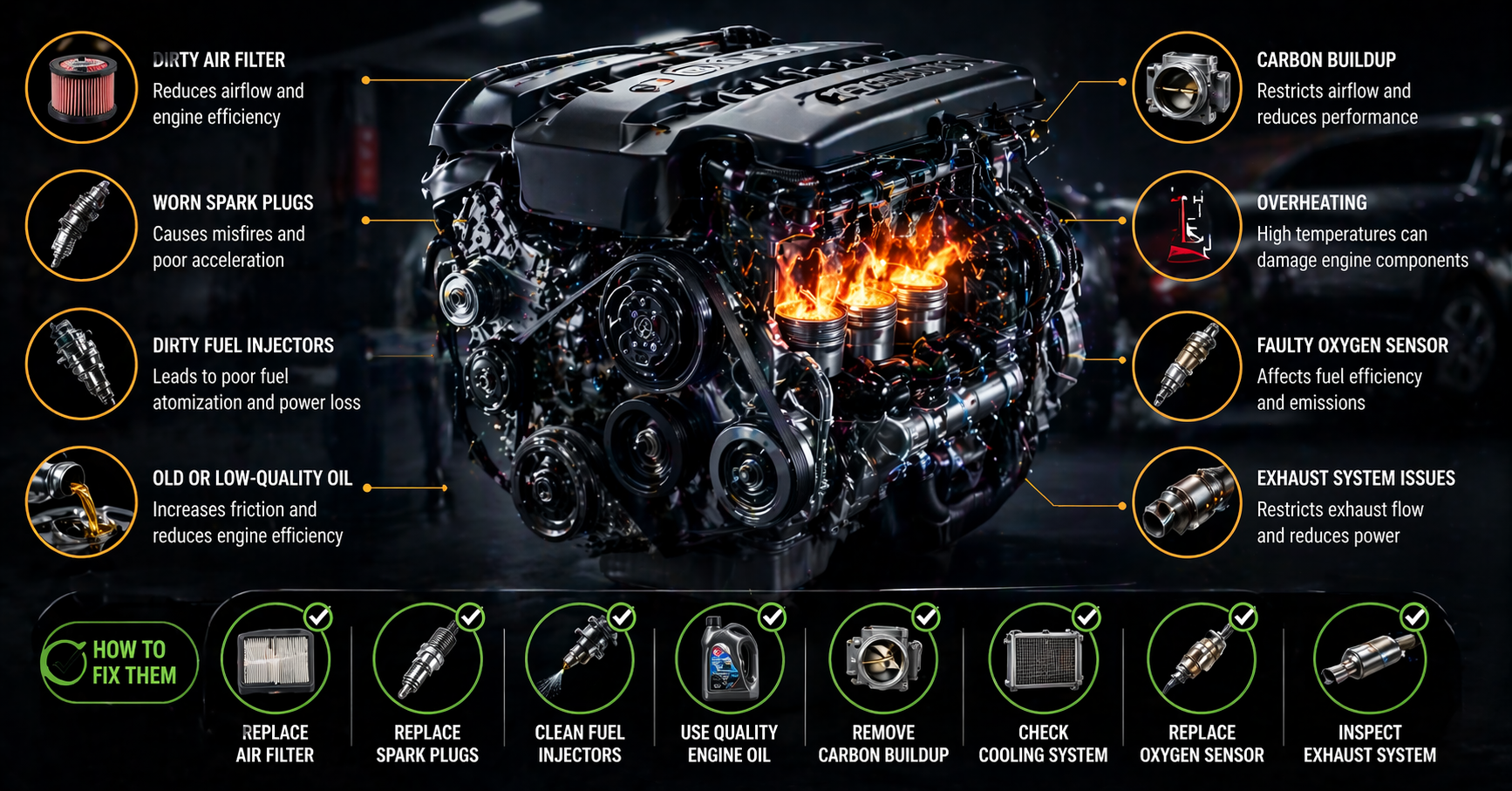
Top Factors That Affect Engine Performance (And How to Fix Them)
Keeping your vehicle's engine in top condition is crucial for ensuring optimal performance and longevity. Several factors can impact the efficiency and functionality of your car's engine. Understanding these factors and knowing how to address them can save you from future headaches and costly repairs. In this article, we will explore some of the most common issues that affect engine performance and provide practical solutions to help you fix them.
Poor Maintenance
One of the primary reasons for decreased engine performance is poor maintenance. Neglecting regular oil changes, air filter replacements, and spark plug inspections can lead to significant problems down the road.
How to Fix:
- Regular Oil Changes: Change your engine oil and filter every 5,000 to 7,500 miles to ensure proper lubrication and to prevent buildup of harmful particles.
- Replace Air Filters: Check and replace the air filter every 12,000 to 15,000 miles to improve airflow and engine efficiency.
- Inspect Spark Plugs: Replace faulty or old spark plugs to improve the ignition system's performance and fuel efficiency.
Use of Low-Quality Fuel
Fueling your vehicle with low-quality gasoline can lead to build-up of deposits in the fuel injectors and combustion chamber, affecting the engine's performance.
How to Fix:
- High-Quality Fuel: Always opt for high-quality or premium gasoline which contains detergents that help reduce engine deposits.
- Fuel Additives: Use fuel additives occasionally to clean the fuel system and enhance engine performance.
Dirty or Clogged Filters
Dirty air and fuel filters restrict the flow to the engine, reducing its efficiency and power output.
How to Fix:
- Regular Inspection: Regularly inspect and replace the air and fuel filters to ensure optimal engine performance.
Ignition System Issues
Problems with components such as ignition coils, distributors, and ignition wires can lead to misfires and reduced performance.
How to Fix:
- Component Replacement: Replace any faulty components in the ignition system to maintain proper firing sequences and engine function.
Sensor Malfunctions
Engine sensors play a critical role in the vehicle's computer system. A malfunctioning sensor can provide incorrect data, leading to engine inefficiency.
How to Fix:
- Diagnostic Check: Use a diagnostic tool to identify any error codes that may indicate sensor issues and replace any faulty sensors.
Maintaining your vehicle's engine in peak condition not only ensures better performance but also prolongs the life of the car. By addressing these common issues, you can enjoy a smoother and more efficient driving experience. For more insightful tips on vehicle maintenance and performance, visit AutoInsight.
Ready to enhance your vehicle's performance? Visit AutoInsight for expert advice and all your car maintenance needs!




Comments (0)