
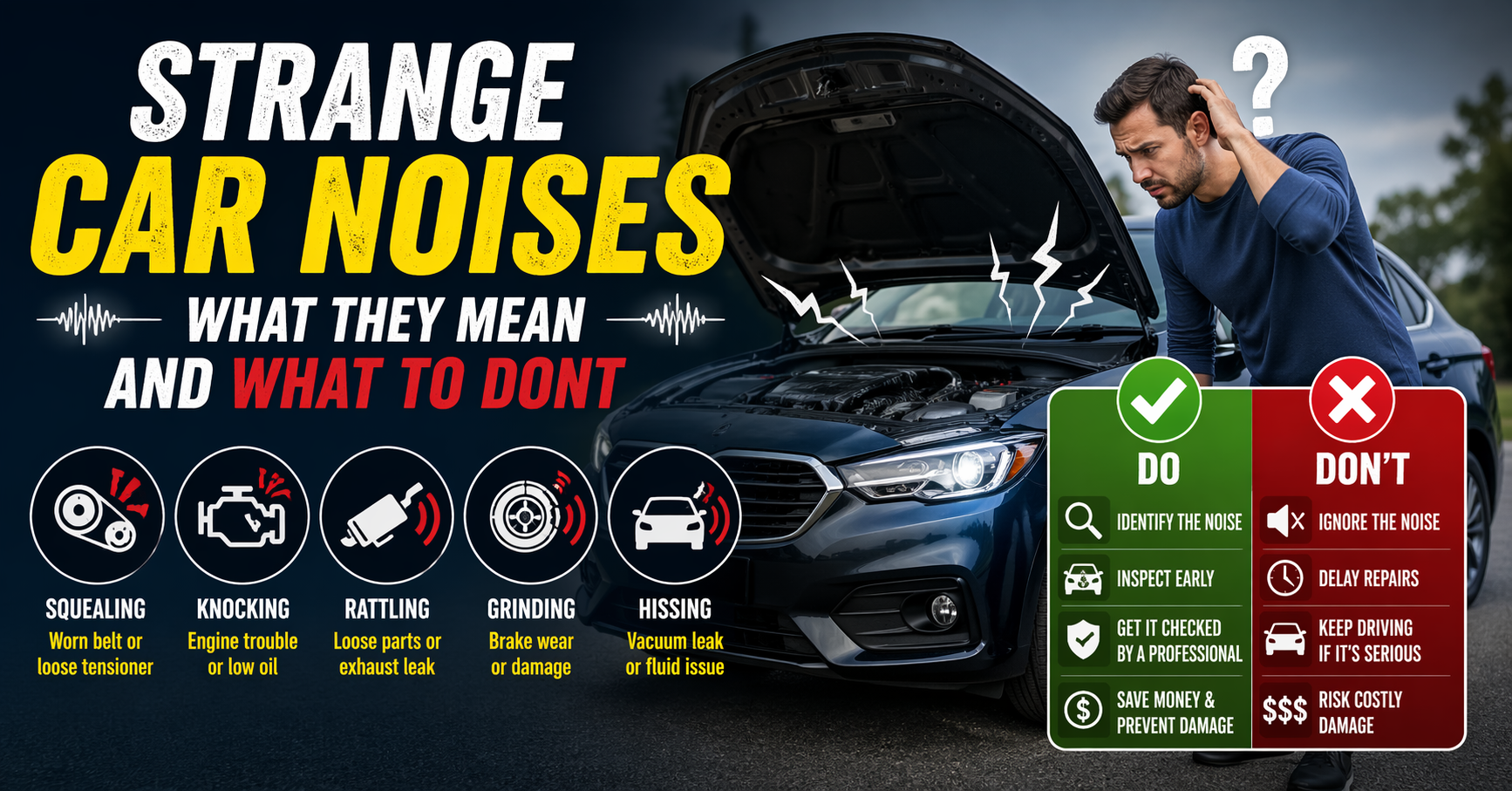
Strange Car Noises What They Mean and What to Do
Have you ever been driving when suddenly your car starts making unfamiliar noises? These sounds can be alarming, and they often signal that something is not right with your vehicle. Identifying the type of noise and understanding its cause is crucial for maintaining your car's health and safety. In this article, we'll explore some common car noises, what they potentially mean, and the steps you should take to address them.
1. Squealing or Screeching When Braking
If you hear a high-pitched squeal when you apply the brakes, it's likely a sign that your brake pads are worn out. Brake pads have wear indicators that make a screeching sound to alert you when they need to be replaced. Action: Schedule an appointment with a mechanic to have your brake pads checked and replaced if necessary.
2. Grinding Noise During Braking
A grinding sound during braking is more serious than a squeal. It usually means that the brake pads are completely worn down and the metal of the calipers is grinding against the metal of your rotors. Action: This is an urgent issue that requires immediate attention to avoid further damage and ensure safe braking.
3. Clicking Noise When Turning
A clicking noise when turning can indicate a problem with the CV (constant velocity) joints. These are located at the ends of the drive shafts and are crucial for transferring the torque to the wheels while driving. Action: Have a mechanic inspect the CV joints and replace them if they are damaged or worn out.
4. Rumbling or Roaring That Increases with Acceleration
This noise may originate from a faulty exhaust system or an issue with the transmission. It often gets louder as you accelerate. Action: Visit a mechanic to check if there's a hole in the exhaust system or a problem with the transmission.
5. Hissing or Sizzling Under the Hood
A hissing sound when the engine is off can indicate a leak in the cooling system or in one of the vacuum lines. Action: Do not open the hood while the engine and radiator are hot. Once the engine has cooled, check for any visible leaks and have your car inspected by a professional.
6. Knocking From the Engine Bay
Engine knocking sounds can be caused by using the wrong type of fuel, issues with the ignition system, or build-up inside the engine. Action: Try using a higher octane fuel. If the problem persists, it is advisable to have your vehicle checked by a mechanic to avoid more serious damage.
Understanding what different car noises mean can be a key factor in maintaining the longevity and performance of your vehicle. Always pay attention to the sounds your car makes, and do not hesitate to seek professional help when necessary. Early diagnosis and repair can save you money and prevent safety hazards on the road.



Comments (0)