
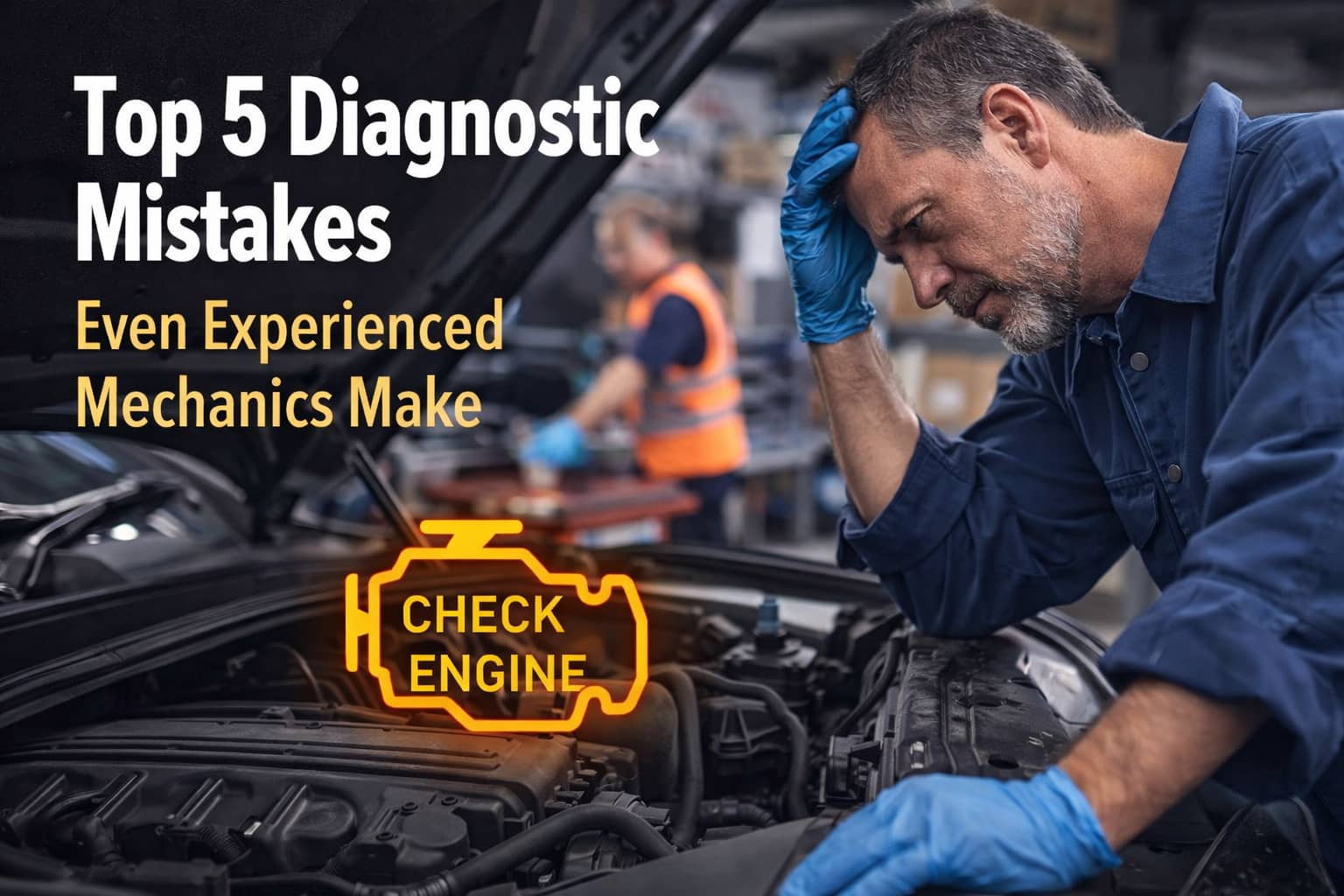
Top 5 Diagnostic Mistakes Even Experienced Mechanics Make
Even the most skilled and experienced mechanics can fall prey to certain diagnostic errors when assessing vehicle problems. These mistakes can lead to unnecessary repairs, increased costs, and sometimes, unresolved issues. Understanding these common errors can enhance diagnostic accuracy and save time and money. Here are the top five diagnostic mistakes even seasoned mechanics make.
Mistake #1: Overlooking Simple Solutions
Often, mechanics might start thinking complex when the problem is actually simple. For instance, a car might not start because of a dead battery, but a mechanic might begin testing the electrical system or the starter before checking the battery's condition. It's important to check the most obvious issues first; this includes checking for loose connections, worn out batteries, and blown fuses.
Mistake #2: Misinterpreting Diagnostic Codes
Modern vehicles are equipped with onboard diagnostics (OBD) systems that produce error codes when malfunctions occur. However, these codes can sometimes be misleading. An error code indicating a sensor problem doesn't always mean the sensor is defective; it could also be an issue with the wiring or the component the sensor is monitoring. Experienced mechanics know that diagnostic codes are just the starting point and not the definitive answer.
Mistake #3: Ignoring Customer Complaints
Customer feedback is vital in the diagnostic process. Sometimes mechanics may dismiss customer complaints as irrelevant or assume they know better, leading to misdiagnosis. Listening carefully to a customer's observations can provide crucial hints that lead directly to the root of the problem.
Mistake #4: Relying Solely on Technology
While diagnostic tools and software are essential in modern auto repair, relying solely on them can be a mistake. There is no substitute for hands-on testing, physical inspections, and the human senses. For example, a computer might not catch a small air leak in a hose that can be heard or felt by a mechanic on inspection.
Mistake #5: Failing to Consider Related Systems
When a mechanic encounters a problem, it's crucial to consider all systems that could be affected. For example, issues with the cooling system can impact engine performance, but the problem might mistakenly be diagnosed as an engine issue alone. Understanding how different vehicle systems interact ensures a more comprehensive approach to diagnostics and repairs.
In conclusion, even the most experienced mechanics can make diagnostic errors. Awareness and understanding of these common mistakes can lead to more accurate troubleshooting, better service, and happier customers. Always approach automotive diagnostics with a balanced perspective of technology and traditional mechanic intuition.




Comments (0)