
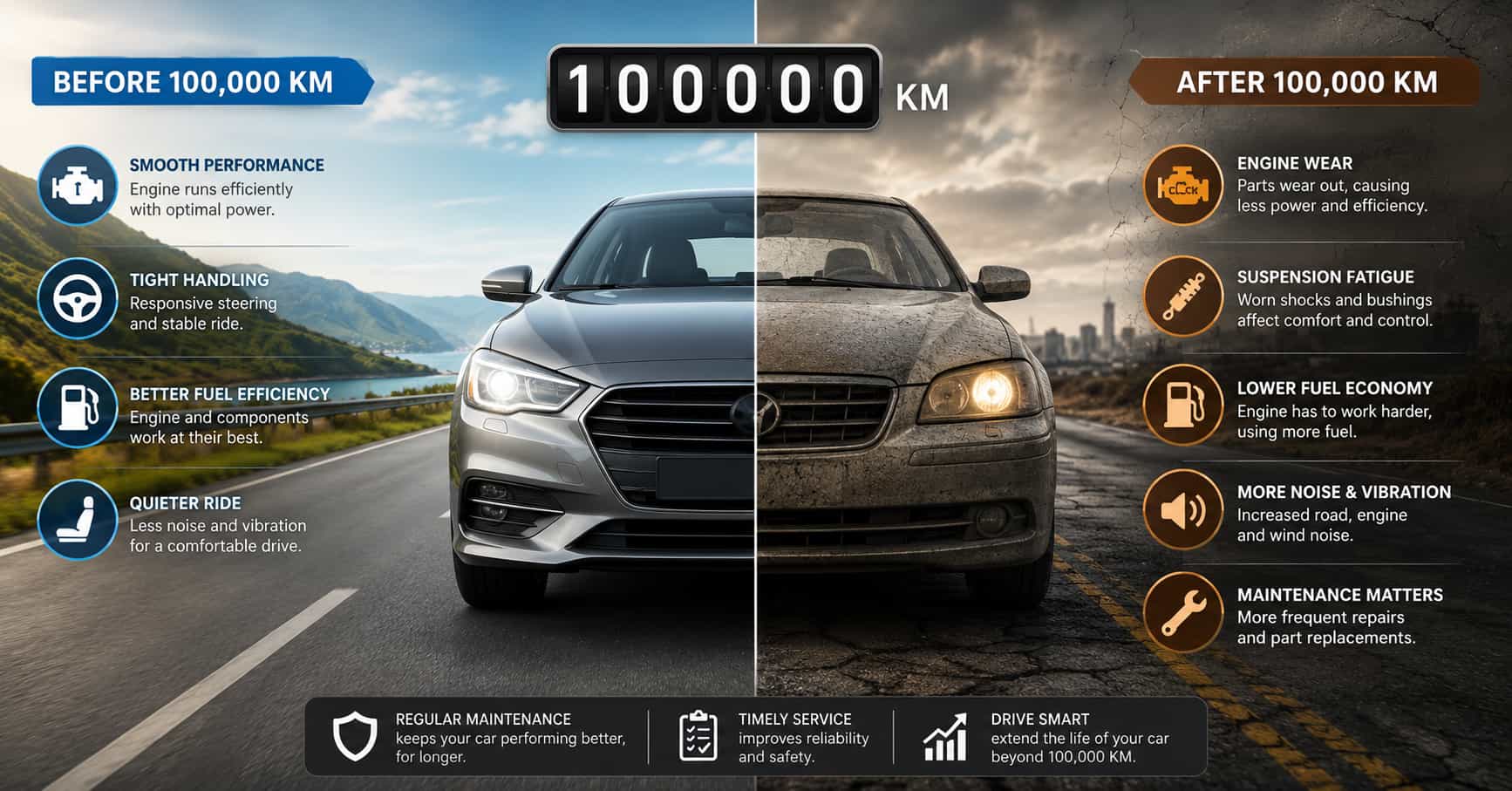
Why Your Car Feels Different After 100,000 KM
Reaching 100,000 km is a significant milestone for any vehicle. It's an occasion that might bring a sense of achievement, but also one that might raise concerns as you start noticing that your car feels somewhat different. This change is not just in your head; several factors contribute to the changes you're experiencing. In this article, we'll explore why these changes occur and what you can do to ensure your car continues to serve you well beyond this milestone.
Wear and Tear
First and foremost, the most obvious reason your car feels different is due to wear and tear. Over time, vehicle components naturally degrade. For instance, engine parts wear out, and fluid properties degrade, which can affect the car's performance. Suspension components like shocks and struts also wear out, leading to a rougher ride. Similarly, the bushings and bearings that help reduce friction in moving parts also wear down, which can make steering feel looser or less responsive.
Accumulated Minor Damages
Throughout its life, your car experiences many minor incidents—small bumps, potholes, or uneven road surfaces—that cumulatively start to affect its overall functionality. These might not be immediately noticeable, but over time, they can alter the alignment or damage parts of the suspension system, further changing how the car handles and feels on the road.
Engine and Transmission Changes
As the mileage increases, the engine and transmission might not perform as they did when they were new. Components such as the transmission gears and the engine's pistons and cylinders can wear down, leading to decreased power output and a change in how smooth your vehicle feels while accelerating or shifting gears.
Depreciation of Insulation Materials
The materials used for soundproofing and insulating the car from road noise and vibrations degrade over time. As these materials thin out or degrade, you might notice more road noise and vibrations than you did previously, contributing to a different driving experience.
Technological and Software Degradation
Modern cars are equipped with numerous sensors and computers that manage everything from engine performance to the car's multimedia system. Over time, these technological components can suffer from faults or become outdated, which might affect various functionalities, from the efficiency of the engine to the responsiveness of the touchscreen interface.
Maintenance and Repairs
Regular maintenance becomes even more crucial as a car ages. If you've been diligent with your car's maintenance schedule, the changes at 100,000 km might be less pronounced. However, if maintenance has been sporadic, you might notice more significant differences in performance and feel. Keeping up with maintenance not only helps in retaining the car’s feel but also extends its life.
Conclusion
Reaching 100,000 km is not the end of your car's life; it's a milestone that calls for evaluation and possibly more attentive care. By understanding what changes to expect and maintaining vigilant care of your vehicle, you can manage and even mitigate many of the issues that cause your car to feel different at this stage. Remember, a well-maintained car can travel much further than 100,000 km, continuing to provide reliable and comfortable transportation.
For more information and expert tips on car maintenance, visit our website at autoinsight.ca .




Comments (0)