
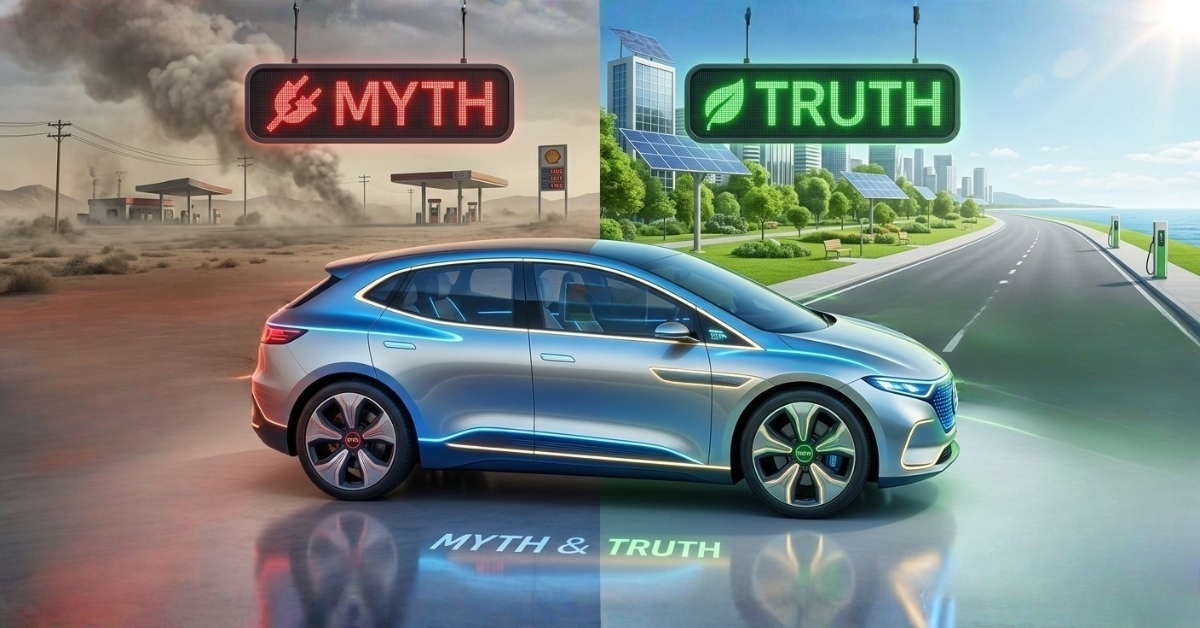
5 Electric Vehicle Myths People Still Believe in 2026
Despite the rapid growth in the electric vehicle (EV) market, certain myths continue to persist, affecting consumer perception and adoption rates. In this article, we'll debunk five of the most common electric vehicle myths still circulating in 2026.
Myth 1: Electric Vehicles Have Limited Range
One of the most prevalent myths is that EVs can't travel long distances on a single charge. However, advancements in battery technology have significantly increased the range of most EVs. As of 2026, many electric cars can travel over 300 miles per charge, with some high-end models reaching up to 500 miles. Range anxiety is becoming a thing of the past as EV technology continues to evolve.
Myth 2: Charging Infrastructure is Inadequate
Another concern often voiced is the lack of EV charging stations. However, the infrastructure for electric vehicles has expanded immensely. Major highways and cities are now equipped with an abundance of fast-charging stations. Furthermore, many businesses and workplaces offer charging points, not to mention the increase in residential charging options.
Myth 3: Electric Cars Are Too Expensive
The initial cost of electric vehicles was indeed higher than that of traditional gasoline cars. However, the gap in pricing has narrowed significantly. Incentives such as tax rebates and lower running costs make EVs a cost-effective choice in the long run. Moreover, the decrease in battery prices over the years has made electric cars more accessible to a broader audience.
Myth 4: EVs Don't Perform Well
This myth couldn't be further from the truth. Electric vehicles are known for their quick acceleration thanks to instant torque delivery. The lower center of gravity in EVs also enhances handling and overall vehicle dynamics. High-performance electric models from various manufacturers have also proven that EVs can compete with, and often outperform, their gasoline counterparts in terms of speed and agility.
Myth 5: EV Batteries Are Bad for the Environment and Don't Last Long
While it's true that battery production has environmental impacts, the overall lifecycle emissions of electric cars are typically lower than those of combustion engine vehicles. Manufacturers are also improving the recyclability of EV batteries and the sustainability of their production processes. As for longevity, modern EV batteries are designed to last for over a decade and are often covered by extensive warranties.
As we move further into the decade, it's clear that the future of transportation is electric. Debunking these myths is crucial for consumers to make informed decisions about embracing sustainable automotive technologies.

Comments (0)