
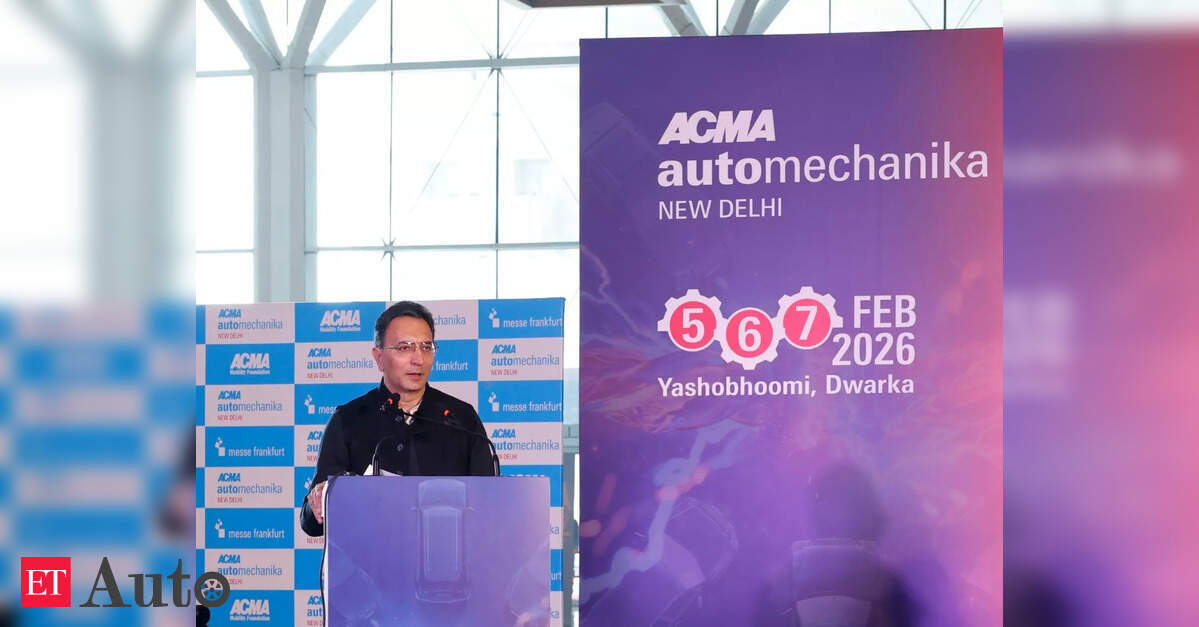

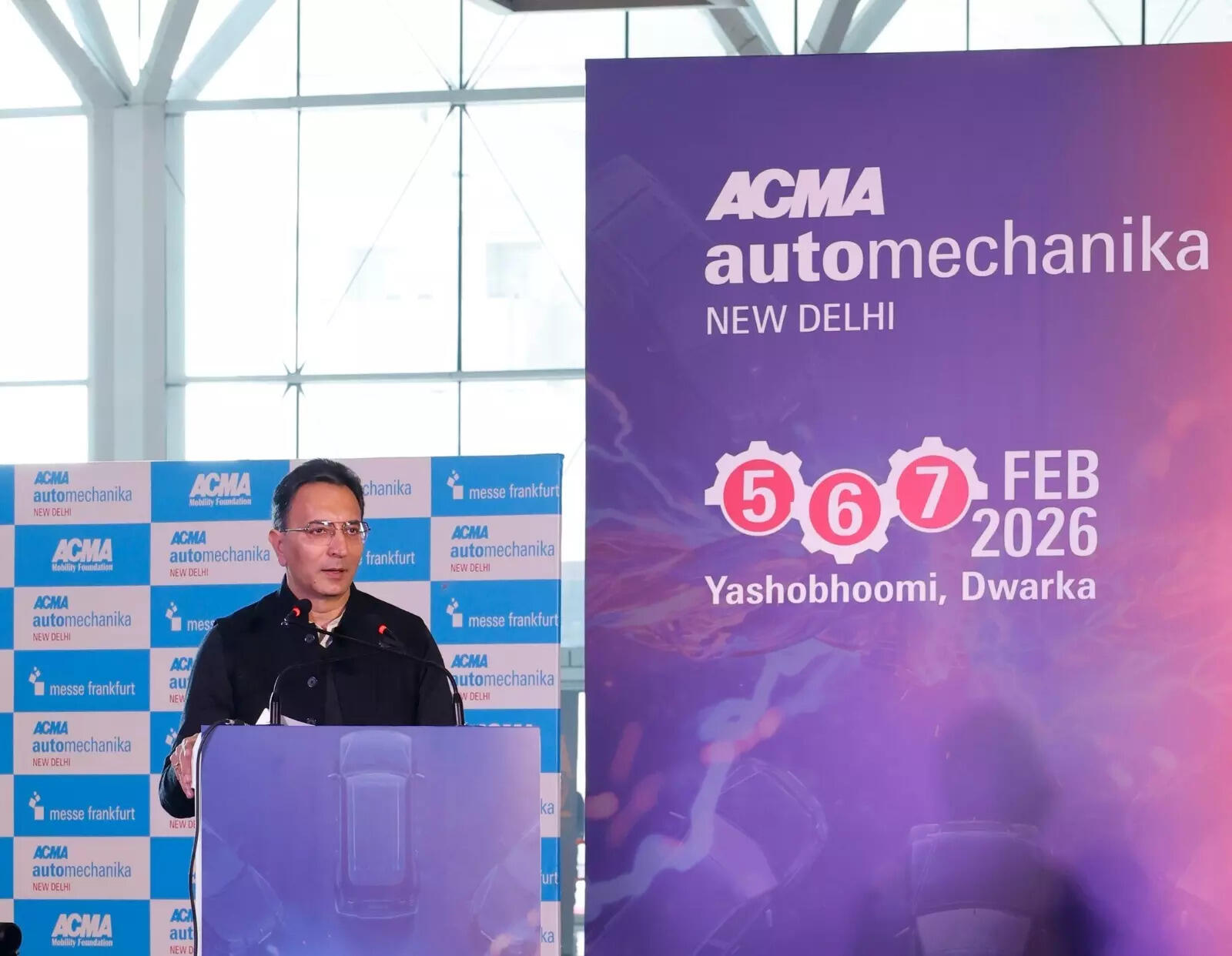
on Thursday said the India–EU and India–US free trade agreements mark a significant shift in India’s trade landscape and place new responsibilities on domestic industry, particularly the auto component sector.
Speaking at the ACMA Automechanika trade fair in New Delhi, Prasada said the two agreements, concluded amid global uncertainty, give Indian manufacturers wider access to overseas markets and require firms to take advantage of the openings created.
FTAs widen market access
Prasada described the India–EU FTA as “the mother of all deals,” noting that it provides access to 27 countries in one move. The agreements, along with earlier FTAs with the UK, Australia, Oman and others, now give India market access to about 65 per cent of global trade, he said.He added that the government had completed its part by negotiating these deals, and the responsibility now lies with industry to make use of the opportunities. “A market like the European Union, a 750-billion market, access… it is up to the industry now to unlock the potential,” Prasada said.
He said the auto component industry, including suppliers in the EV and electronics segment, stands to benefit from the opening up of supply chains. “We are going to be the trusted partner of the EU and the US.”
Budget 2026 measures
Referring to recent budget announcements, Prasada said the government had taken measures on rare earth minerals, magnets and electronic component manufacturing to ensure stable supply chains for domestic producers. He said the electronic components manufacturing scheme has been allocated an additional ₹40,000 crore to support local production for EVs and automotive electronics.The minister emphasised India’s expanding domestic market, including rural regions, which he said has become more consumption-driven. This, he noted, is an additional pull factor for global companies seeking scale.
Prasada also pointed to what he described as political stability, saying it allows the government to take long-term policy decisions aimed at India’s 2047 development goals. He stressed that the government remains open to industry feedback. “It is a stable government, but it is also an agile government… it listens to stakeholders,” he said.
Prasada urged the auto component industry and trade bodies to work closely with the government. “The government has done what it had to. Now the responsibility is on the shoulders of the industry to take this forward and show the world what India has to offer."



Comments (0)