
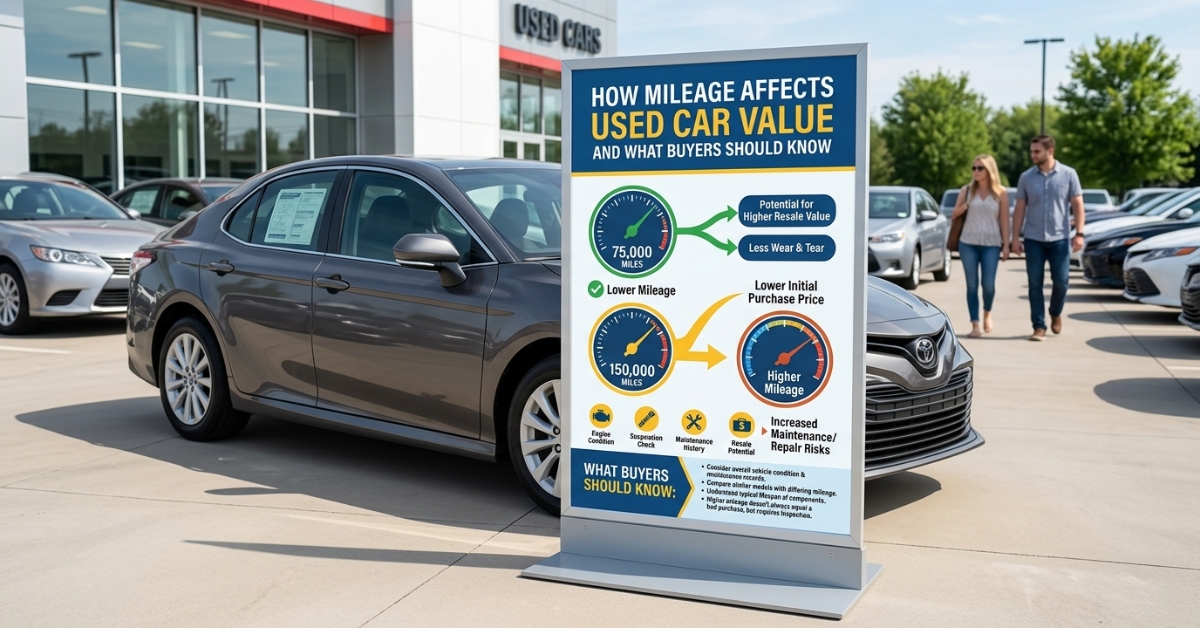
When shopping for a used car, one of the key factors that buyers must consider is the vehicle's mileage. Mileage not only affects the price of a used car but also gives insights into its potential lifespan and maintenance needs. Understanding the impact of mileage can help you make a more informed decision and potentially save money in the long run.
The Impact of Mileage on Car Value
Mileage is often seen as a simple number, but it's a direct indicator of a vehicle's wear and tear. High mileage on a used car usually suggests that it has been extensively used, which can lead to increased maintenance costs and shorter vehicle lifespan. Generally, a car loses value as its mileage increases due to the higher likelihood of parts needing replacement and repair.
Understanding Depreciation
Depreciation is the decrease in a vehicle's value over time and is significantly influenced by mileage. The average car will depreciate approximately 20% to 30% in its first year and between 15% to 18% over the following four years. Typically, lower mileage cars depreciate at a slower rate compared to higher mileage vehicles. Therefore, understanding how quickly a model depreciates can guide you towards making a better purchase decision.
Mileage vs. Age: What's More Important?
While mileage is crucial, the age of the vehicle also plays a significant role in determining its value. A newer car with high mileage may be more valuable than an older car with similar or slightly lower mileage. This is because newer models usually have more advanced technology and better features, which can offset the effects of high mileage to some extent.
How to Check if Mileage Matches Wear and Tear
It's important to verify that the wear and tear on the car is consistent with its mileage. Check for signs like excessive wear on the seats, steering wheel, and pedal rubbers, which could indicate that the mileage on the odometer does not reflect the true use of the vehicle. Additionally, always request a vehicle history report to verify the accuracy of the mileage and ensure the car has not been involved in any major accidents.
What Buyers Should Know
When considering a used car, look beyond the mileage. Evaluate the car's overall condition, including its mechanical and aesthetic aspects. Consider the maintenance history and whether the car was serviced regularly. It's also advisable to have the car inspected by a professional mechanic to uncover any potential issues that might not be obvious at first glance.
Finally, remember that while high mileage can be a sign of potential future expenses, it doesn't necessarily mean that the car is a bad purchase. Many modern vehicles are built to last well beyond 100,000 miles with proper care and maintenance. The key is to balance the mileage with the car's condition and maintenance history to ensure you get the best value for your money.



Comments (0)