
Understanding EV Charging Speeds and Charging Levels
As electric vehicles (EVs) become increasingly popular, understanding the various types of EV charging and the speeds at which they operate is crucial for current and prospective EV owners. This guide will help you understand the different EV charging levels, their speeds, and how they impact your charging experience.
What Are EV Charging Levels?
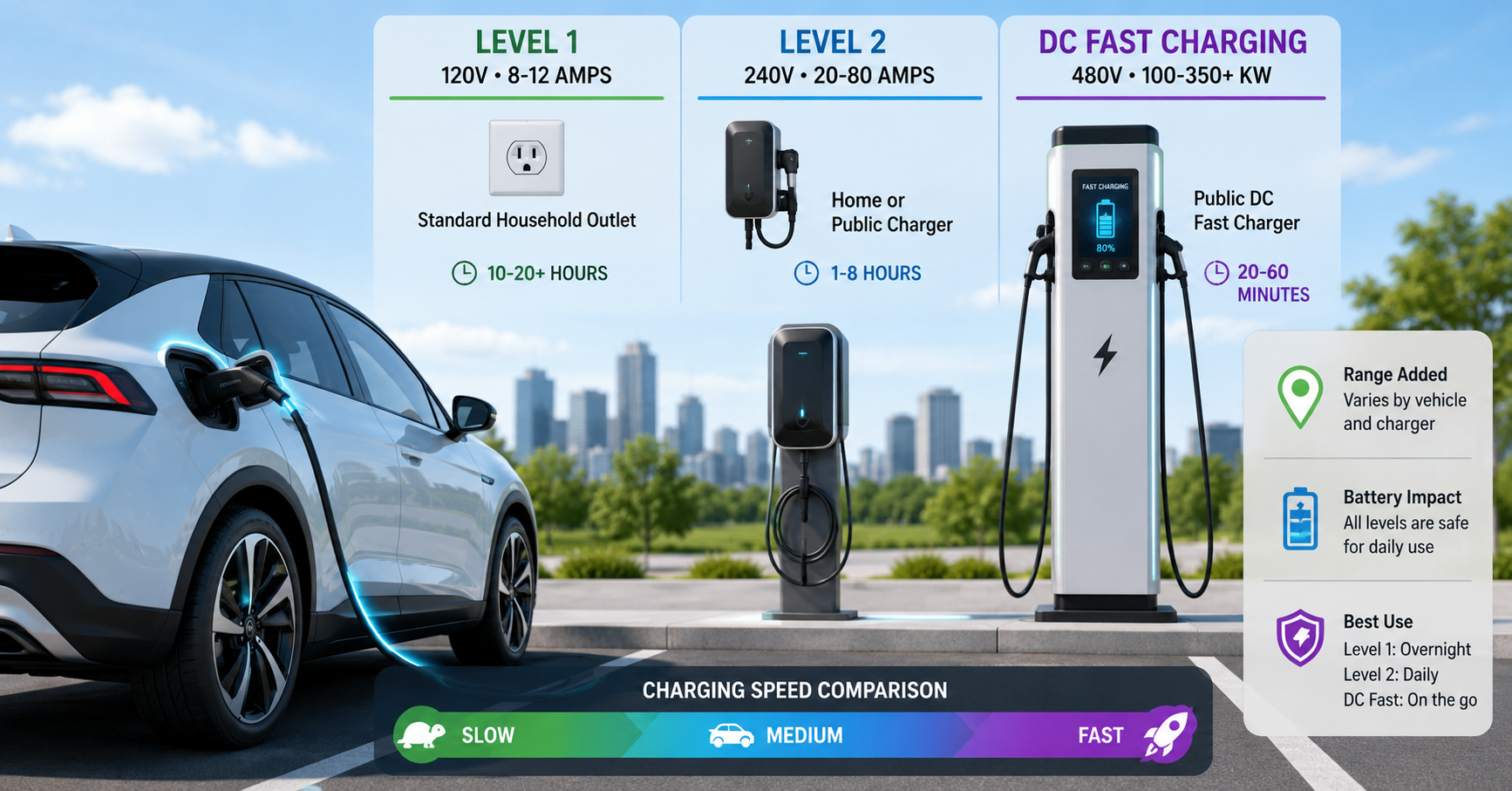
Electric vehicle charging is categorized into three basic levels: Level 1, Level 2, and DC Fast Charging. Each level represents a different method and speed of charging, catering to various user needs and scenarios.
Level 1 Charging: The Slow Charger
Level 1 charging is the most basic form of EV charging. It uses a standard 120-volt AC outlet, the same type used in your home for small appliances. A Level 1 charger is typically included with the purchase of an EV and does not require any special installation. However, it offers the slowest charging speed, generally providing about 4 to 5 miles of range per hour of charging. This level is ideal for overnight charging at home or if you can plug in your car at work during the day.
Level 2 Charging: The Home and Public Charger
Level 2 charging is faster than Level 1 and uses a 240-volt AC power source, similar to what large household appliances like dryers use. Level 2 chargers can be installed at home with professional help and are also widely available in public charging stations. They typically provide about 12 to 80 miles of range per hour of charging, making them suitable for daily use and quicker top-ups.
DC Fast Charging: The Rapid Charger
DC Fast Charging, also known as Level 3 charging, offers the fastest charging speeds available. These chargers operate on a 480-volt DC power supply and can charge an EV battery to 80% in just 20 to 30 minutes. DC Fast Chargers are commonly found along highways and are ideal for long-distance travel, allowing EV drivers to recharge quickly and continue their journey with minimal delay.
For more detailed guides and tips on electric vehicles, visit our website: autoinsight.ca .
Factors Affecting EV Charging Speed
Several factors can influence the speed of EV charging. These include the power output of the charger, the maximum charging rate of the vehicle, the state of the battery (including its temperature and current charge level), and the weather conditions. It's important to understand these factors to optimize your charging strategy.
Choosing the Right EV Charger
Choosing the right charger for your EV involves considering your vehicle's compatibility, your typical daily mileage, and your access to charging locations. For most drivers, a Level 2 home charging station is a worthwhile investment for its balance between speed and convenience. For those who travel longer distances regularly, using DC Fast Charging stations along your route will be necessary.
Conclusion
Understanding the different levels of EV charging helps you make informed decisions about managing your electric vehicle's battery life and optimizing your charging practices. Whether you choose Level 1, Level 2, or DC Fast Charging, each level offers different advantages that cater to specific charging needs. By knowing these differences, you can better plan your charging schedules and ensure your EV is always ready to go when you are.
Remember, the future of driving is electric, and staying informed about EV technology will help you get the most out of your electric vehicle. To learn more about EVs and stay updated with the latest in EV technology,

Comments (0)