
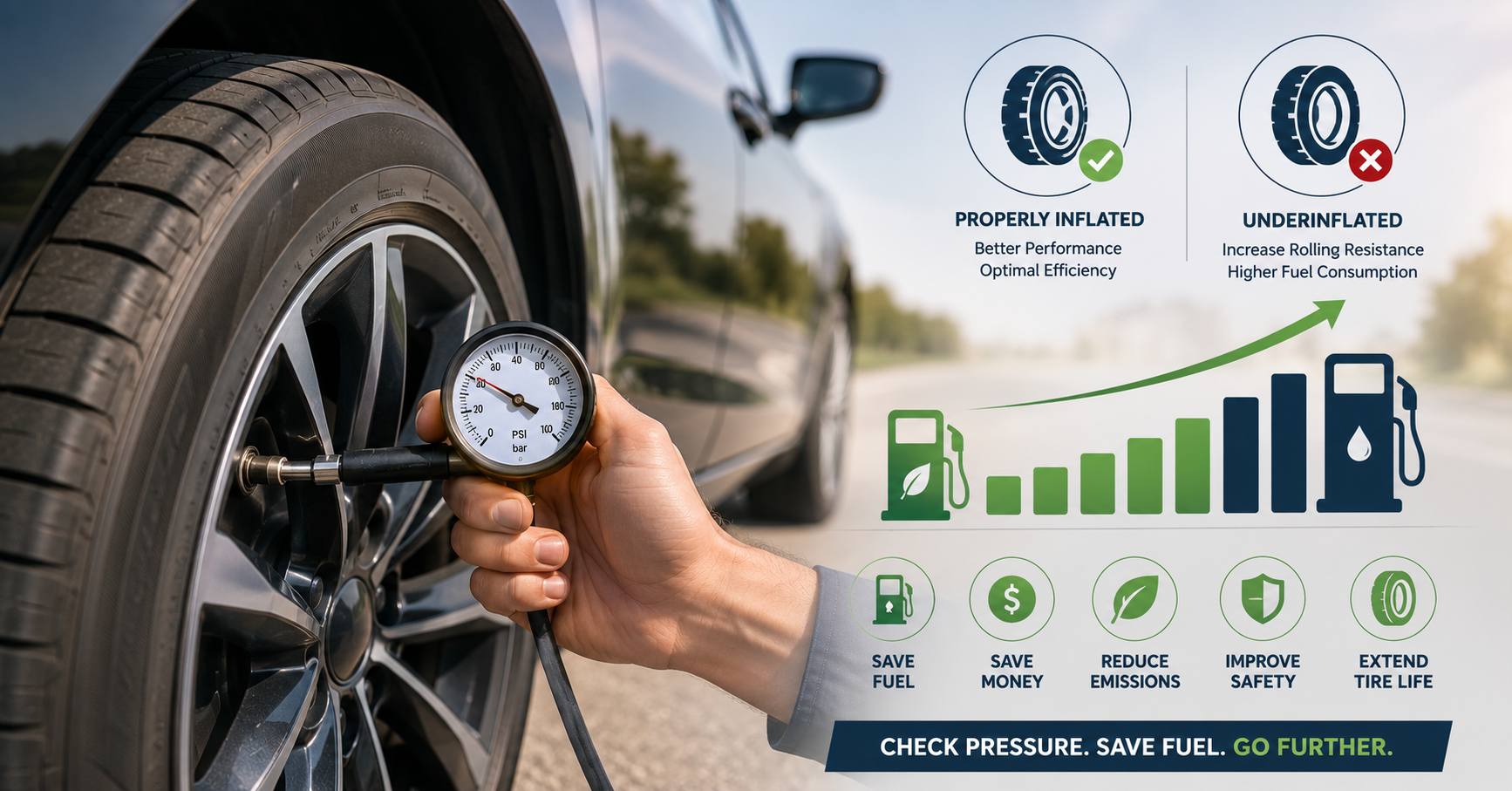
The Connection Between Tire Pressure and Fuel Savings
As fuel prices continue to fluctuate, finding ways to cut down on fuel consumption is a priority for many drivers. One often overlooked aspect of vehicle maintenance that can significantly impact fuel efficiency is tire pressure. Proper tire inflation is not only vital for safety and prolonging the life of your tires, but it also plays a crucial role in reducing fuel consumption. In this comprehensive guide, we will explore how maintaining the right tire pressure can help you save on fuel costs, thereby making your driving more economical and environmentally friendly.
Understanding Tire Pressure and Its Impact on Fuel Efficiency
Tire pressure refers to the amount of air in the tires of a vehicle, which supports the weight of the vehicle and its load. When tires are not inflated to the recommended pressure, they do not perform as designed, leading to increased rolling resistance. Rolling resistance is the force resisting the motion when an object rolls. In the context of vehicles, higher rolling resistance means that the engine has to work harder to move the car, thus using more fuel.
The optimal tire pressure for a vehicle can typically be found in the owner’s manual or on a sticker inside the driver’s side door. This pressure is calculated by manufacturers to provide the best balance between safety, tire wear, and fuel efficiency.
How Proper Tire Inflation Affects Fuel Economy
Studies have shown that for every 1 psi drop in the average pressure of all tires, there is a corresponding .2% increase in fuel consumption. Moreover, tires that are under-inflated by 10 psi can lead to a 3% decrease in fuel economy. This might not seem like much, but it adds up over time and can amount to a significant cost in fuel, especially for those who drive frequently or cover long distances.
Properly inflated tires ensure that the vehicle has less rolling resistance. The lower the rolling resistance, the less effort your engine needs to move your vehicle, leading to better fuel efficiency. To learn more about how you can optimize your vehicle for better performance and savings, visit autoinsight.ca .
Practical Tips for Maintaining Tire Pressure
Maintaining the correct tire pressure is simple and can be done in a few easy steps:
- Check Tire Pressure Regularly: It is advisable to check your tire pressure at least once a month and before any long trips. Tire pressure should be checked when the tires are cold, as heat can cause the pressure inside the tire to increase temporarily.
- Use the Right Equipment: Use a reliable tire pressure gauge to check your tires. Digital tire gauges are generally more accurate and easier to read.
- Follow Manufacturer’s Recommendations: Always inflate your tires according to the manufacturer’s recommended tire pressure.
- Monitor for Tire Wear: Regularly inspect your tires for wear and tear. Uneven wear can also indicate that tire pressure is not correctly maintained.
Conclusion
Maintaining proper tire pressure is a straightforward yet effective way of enhancing your vehicle’s fuel efficiency. By ensuring that your tires are adequately inflated, you not only save on fuel costs but also contribute to safer driving conditions and reduce the environmental impact of your driving. Remember, the benefits of maintaining proper tire pressure extend beyond fuel savings and include prolonged tire life and improved vehicle handling. Start checking your tire pressure today to enjoy these perks.




Comments (0)