
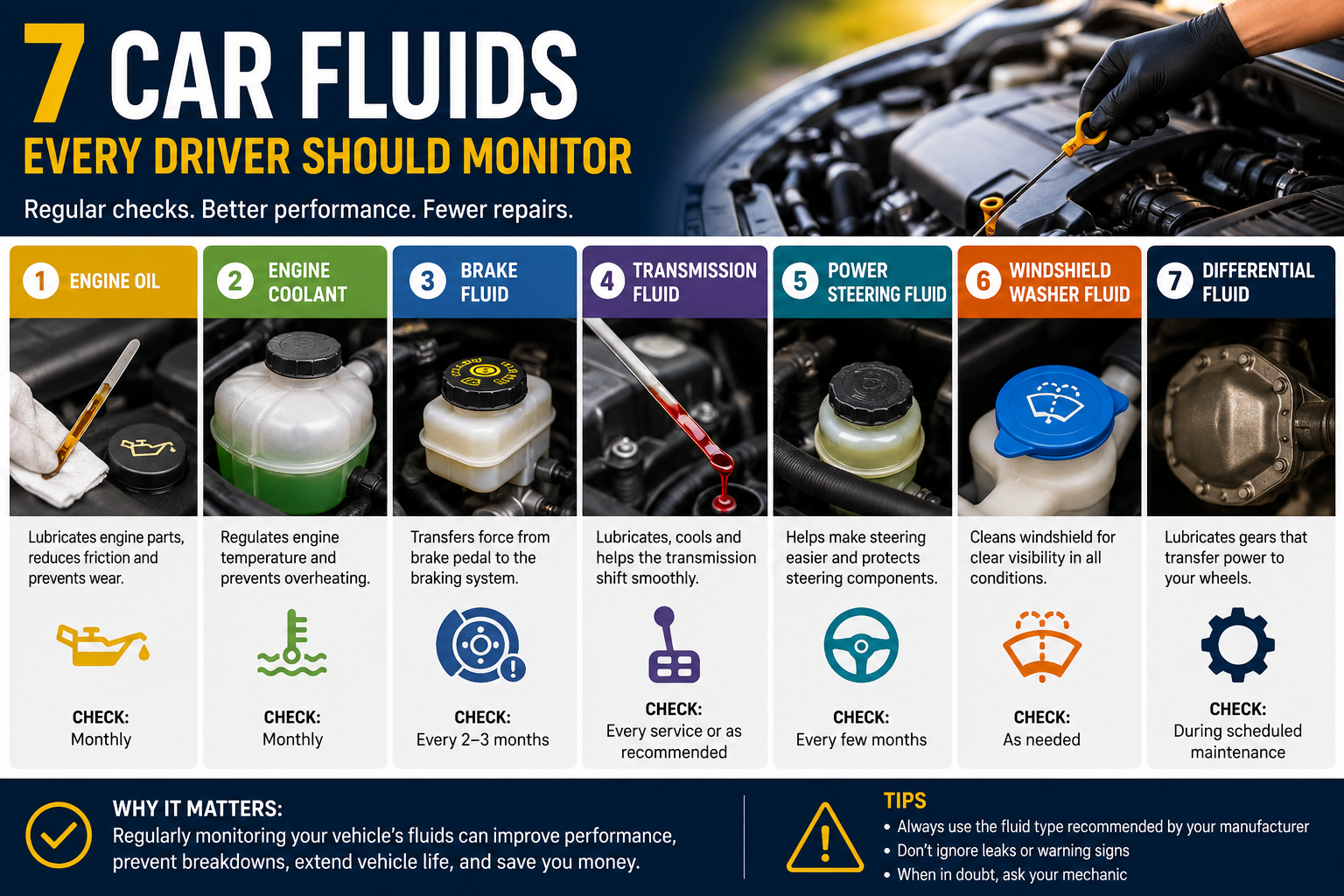
Your vehicle relies on several essential fluids to keep it running safely and efficiently. Ignoring them can lead to expensive repairs, poor performance, or even complete engine failure. The good news is that checking most car fluids only takes a few minutes and can help extend the life of your vehicle.
Also Read - The Future of AI in the Automotive Industry, Trends to Watch in 2026
Here's a guide to the seven essential car fluids every driver should monitor and why they matter.
1. Engine Oil
Engine oil lubricates the moving parts inside your engine, reducing friction and preventing overheating. Over time, oil becomes contaminated with dirt and loses its effectiveness.
Signs Your Engine Oil Needs Attention
-
Oil warning light appears
-
Engine sounds louder than usual
-
Dark, dirty oil on the dipstick
-
Burning oil smell
-
Low oil level
How Often to Check
Check your engine oil at least once a month and before long road trips. Follow your manufacturer's recommended oil change intervals.
2. Engine Coolant (Antifreeze)
Coolant regulates your engine's temperature, preventing it from overheating in the summer and freezing in the winter.
Signs of Low or Bad Coolant
-
Engine temperature gauge is high
-
Steam coming from under the hood
-
Sweet smell around the engine
-
Low coolant reservoir level
How Often to Check
Inspect the coolant reservoir every month. Never open the radiator cap while the engine is hot.
3. Brake Fluid
Brake fluid transfers the force from your brake pedal to the braking system. Without enough clean brake fluid, your stopping power can be compromised.
Warning Signs
-
Soft or spongy brake pedal
-
Brake warning light
-
Reduced braking performance
-
Dark-colored brake fluid
How Often to Check
Inspect the brake fluid reservoir every few months and replace the fluid according to your manufacturer's maintenance schedule.
4. Transmission Fluid
Transmission fluid lubricates and cools the transmission while helping your vehicle shift gears smoothly.
Symptoms of Low Transmission Fluid
-
Delayed gear changes
-
Slipping gears
-
Grinding noises
-
Transmission overheating
-
Fluid leaks under the vehicle
How Often to Check
Many vehicles require transmission fluid inspections every 30,000 to 60,000 km, although some newer models have sealed transmissions. Refer to your owner's manual.
5. Power Steering Fluid
Power steering fluid helps make steering easier and protects steering system components from excessive wear.
Signs It Needs Attention
-
Difficulty turning the steering wheel
-
Whining noise while steering
-
Steering feels stiff
-
Fluid leaks near the front of the vehicle
How Often to Check
Inspect the reservoir during routine maintenance or whenever steering feels unusual.
6. Windshield Washer Fluid
Although it doesn't affect vehicle performance, windshield washer fluid is essential for maintaining visibility during rain, snow, mud, and road salt.
When to Refill
-
Reservoir is empty
-
Windshield isn't cleaning properly
-
Warning light appears (on some vehicles)
Pro Tip
Use winter-rated washer fluid during colder months to prevent freezing.
7. Differential Fluid (Gear Oil)
Differential fluid lubricates the gears that transfer engine power to your wheels. This fluid is especially important for trucks, SUVs, all-wheel-drive (AWD), and four-wheel-drive (4WD) vehicles.
Signs It May Need Replacement
-
Whining or humming noises
-
Vibrations while driving
-
Gear wear
-
Fluid leaks near the axle
Maintenance Interval
Most manufacturers recommend replacing differential fluid every 50,000 to 100,000 km, depending on driving conditions.
Tips for Safe Fluid Checks
-
Always park on a level surface.
-
Allow the engine to cool before checking coolant.
-
Use only the fluid type recommended by your vehicle manufacturer.
-
Never overfill any fluid reservoir.
-
Address leaks immediately to avoid more serious mechanical problems.
-
Keep a maintenance log so you know when each fluid was last checked or replaced.
Why Regular Fluid Checks Matter
Routine fluid inspections are one of the easiest and most cost-effective ways to keep your vehicle in top condition. Maintaining proper fluid levels can:
-
Improve engine performance
-
Enhance fuel efficiency
-
Prevent overheating
-
Extend the life of your vehicle
-
Improve braking and steering safety
-
Reduce the risk of expensive repairs
Even if your vehicle seems to be running well, taking a few minutes each month to inspect these essential fluids can save you significant time and money in the future.
Also Read - 10 Essential Checks Before Buying A Used Car In Canada
Final Thoughts
Every vehicle depends on a variety of fluids to operate safely and efficiently. By regularly checking your engine oil, coolant, brake fluid, transmission fluid, power steering fluid, windshield washer fluid, and differential fluid, you can catch potential problems early and keep your car running smoothly for years to come.
Whether you're preparing for a daily commute or a long road trip, regular fluid maintenance is a simple habit that pays off with better performance, improved reliability, and greater peace of mind.






Comments (0)